

A nail salon, a dry cleaner, a paint supply, a sandwich shop, and an automotive repair garage; what do these tenants have in common? From a commercial property management perspective, they’re potentially great tenants who pay on time and form long term relationships. However, they may also bring potential environmental risks with high cleanup costs.
 Having tenants comes with risk and the potential to cause cosmetic damage such as holes in the walls, trash left behind, or a broken window or door lock, each adding up in costs. In the case of our sample tenants, each also poses a much greater potential of risk. The paint store, nail salon and dry cleaner regularly work with solvents. The sandwich shop has a grease trap needing to be cleaned properly, often using harsh, grease-cutting chemicals. The automotive repair garage carries additional risk in the form of oils, greases, coolant and lead acid batteries.
Through ignorance, negligence, or poor risk management, tenants can potentially release “restricted wastes” such as solvents, fuels, acids and bases. These restricted wastes may cause significant harm to the property not identified during a normal management walk through. Chemicals might get flushed down the drain, dumped on an asphalt parking lot, or spread over landscaping, each of which is a potential route to soil and groundwater. The subsequent environmental contamination may not impact the subject property, however the liability can potentially reach to neighboring properties. The cost of characterizing a single solvent or petroleum hydrocarbon release can quickly exceed tens of thousands of dollars, and remediation can be significant, often hundreds of thousands of dollars. The mere suspicion of improperly disposed of restricted wastes on a property can delay closure of a sale when documented by a bank requiring a Phase I Environmental Site Assessment.
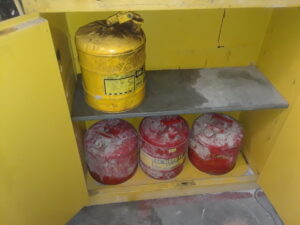 A property owner or manager may never see the day-to-day operations which put the property at risk. A state of Nevada licensed Certified Environmental Manager (CEM) has both the training and the experience to identify potential hazards before they become a real liability through an environmental audit.
A credible environmental audit program is designed to help property owners manage risk by regularly inspecting both the physical property and the activities taking place there, documenting recognized environmental conditions (RECs). These CEMs look beyond the cosmetic damage that may impact immediate property value, for the less noticeable potential environmental risk to facilitate property owner liability mitigation.
A formal environmental audit report is generated for the property owner, with corrective actions spelled out to help eliminate RECs. A consultant then returns to the property to monitor the progress until the tenant has resolved the hazards, and regularly visits the site to ensure best practices are being followed.
Of course, the program isn’t only for strip malls. The program is ideal for the risk adverse property owner, those with industrial properties; automotive centers; gas stations; equipment rental facilities; dry cleaners; beauty salons; and restaurants. Environmental Audit documentation provides an ongoing history of the site, which may facilitate future transfers of the property.
An environmental audit is a small investment compared to the cost of characterization and remediation after a preventable release is discovered. Environmental audits, performed by CEMs, are an effective way to manage the potential environmental risk inherent to commercial property ownership.