

Whether you’re building a road, high-rise, or installing utilities, you are most likely disturbing, if not removing, vegetation which is a critical element of erosion control. Roots keep soils in place and plant canopies provide additional protection from wind and rain. Construction work near surface water can result in increased turbidity with potentially large quantities of loose sediment entering our streams and lakes. Turbidity is the sediment load in the water. Increases in turbidity can be caused by additional erosion due to weather, construction activities or other disturbances. In a matter of hours, a small construction site can generate enough sediment to impact an entire stream or lake. The result is degradation of water quality and threats to plant and animal life. Remediation can be costly and ineffective at restoring the original water quality.
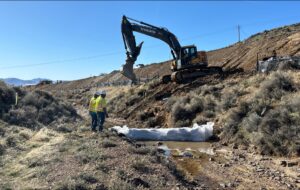
To address the potential impact of construction work on streams and lakes, the Nevada Department of Environmental Protection (NDEP) typically requires a temporary permit for construction work in or near surface waters, no matter how small. The temporary permits often have a long list of requirements, but a principal component almost always includes sampling of the waterway to measure constituents and/or turbidity changes caused by the work performed. Monthly submission of a Discharge Monitoring Report (DMR) is typically required. The monthly DMR illustrates permit compliance and includes a summary of events that affected the waterway, such as petroleum constituents released from heavy equipment, increases in turbidity, and waterway diversions. Violations of permit compliance can result in fines and/or project delays.
GES is currently assisting a contractor with their permit compliance on a highway improvement project in northern Nevada. The project includes the contractor diverting portions of a stream through culverts to allow for freeway intersection reconfiguration and for placement of erosion controls. Among other items, the permit requires monitoring of the temporary stream diversions, like the one pictured above, for flow rate and turbidity changes. Increases in turbidity often require additional best management practices to be implemented by the contractor.
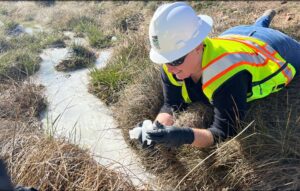
GES provides water and/or soil sampling and analysis when events occur in or near the stream to comply with specific conditions listed within the permit. On this highway project, GES prepared a permit checklist to assist the on-site foreman to meet daily observation requirements. GES’ duties also include preparing the DMR, along with applicable event reports, and delivering the monthly report to the client for timely submission to NDEP. A GES Certified Environmental Manager will prepare a final report upon project completion.
Is your project near a waterway? GES’ team of certified environmental managers and geologists can guide you through the NDEP permitting process and assist your project teams’ efforts in permit compliance.