

Ground source heat exchange (GSHE) systems, also known as geothermal heating and cooling systems, offer an efficient, long-term, and environmentally friendly alternative to traditional heating and cooling systems. GSHE systems utilize the relatively stable year-round earth temperatures to exchange heat with the ground. Heat transfer in these systems is facilitated through looped piping, dissipating heat into the ground during the summer, and drawing heat from the ground during the winter.
But how does geothermal heating and cooling compare to traditional HVAC options such as evaporative cooling units and forced-air systems? What does it mean to our clients?
Energy Efficiency and Cost S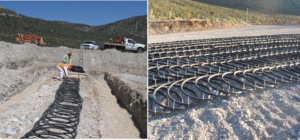 avings
GSHE systems rely on the earth’s stable underground temperature rather than outside air. In extreme environments such as Las Vegas’ summers, traditional systems work harder to meet cooling demands resulting in higher energy costs. The EPA reports that ground-source heat pumps can achieve energy savings of 50-70% on heating and 20-50% on cooling when compared to traditional systems.
Geothermal heating and cooling systems generally require more up-front costs than other systems; however, there are several tax incentives for GSHE systems including residential tax credits, commercial investment tax credits, accelerated depreciation, and the Energy-Efficient Building Deduction (Section 179D), all of which reduce the cost of the systems and accelerate the return on the initial investment. It is not uncommon for the cost of installation of a geothermal system to be cut in half by local and federal grants.
Increased Property Value
Studies suggest buildings with energy-efficient technologies tend to have higher resale values, particularly in properties that showcase the reduced utility costs. So while GSHE systems generally require more up-front costs, the cost of the system can be offset through long-term energy savings and an increase in property value.
Durability and Low Maintenance
GSHE loops are installed underground and heat pumps can be housed indoors, so the systems are more protected from extreme weather conditions in Las Vegas than traditional systems. With few moving parts, the subsurface piping and heat pumps can have life spans of 50 years and 20 years, or more, respectively.
Environmental Impact
As the Southwest moves away from water-intensive evaporative cooling units, geothermal heating and cooling systems offer an efficient system that reduces water and energy consumption. GSHE systems do not produce on-site emissions and do not use refrigerants like some traditional systems.
So although ground-source heat exchange systems require more up-front costs, they outperform traditional HVAC systems over their lifespan due to their reliability and durability. Combining infrequent low-cost maintenance with utility cost savings, increased property values, and applicable tax incentives, GSHE systems provide a robust long-term, cost effective, energy efficient, and environmentally friendly approach to replacing traditional systems.
GES along with our sister company, Eagle Drilling Services, are ready to answer your geothermal heating and cooling questions. when you are ready, we can perform a feasibility study to determine how much a ground source heat exchange system will enhance your indoor environment.
Are you looking to learn more?