

What does Napoleon, a cure for syphilis, and wood preserving processes all have in common? They all contain arsenic!
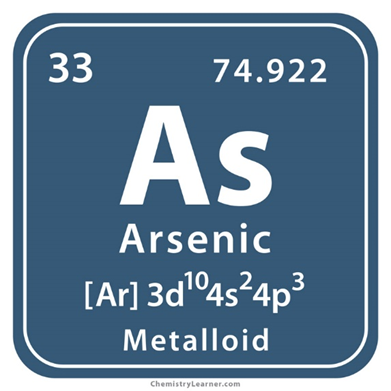 Arsenic is a naturally occurring element, metal, and mineral that is commonly present in soil, groundwater, and air. Although arsenic is naturally occurring, it is also a constituent of concern in construction, and environmental regulations have a problematic time managing arsenic sites. Naturally occurring arsenic (NOAs) sites are typically unregulated because arsenic is found everywhere in the western US. Most human exposure to arsenic is from private drinking water, construction disturbances of natural materials, and outdoor activities that disturb soil (e.g. off-roading).
Current US EPA soil, air, and drinking water screening levels for arsenic are: 680 ug/Kg (resident soil); 3,000 ug/kg (industrial soil); 0.052 ug/L (tap water); 0.00065 mg/m3 (resident air); 0.0029 ug/m3 (industrial air); and a maximum of 10 ug/L for drinking water.
However, within the conterminous US, NOAs background levels in shallow soil ranges from <600 ug/kg to 830,000 ug/kg, background levels in air are approximately 0.0004 ug/m3, and in Nevada the average arsenic level in drinking water wells is 55 ug/L. You are more likely to find NOAs:
- in soil over the US EPA screening level than under it;
- in private drinking water wells over the US EPA screening level than under it; and
- in the air under the US EPA residential air screening level.
What does it all mean?
Arsenic is in our soil, air, and water naturally and the public should be aware. However, simple precautions such as wearing a mask while off-roading and washing your hands often can reduce exposure greatly.
If you have a naturally occurring arsenic concern on your jobsite, GES stands ready to help you through the process.